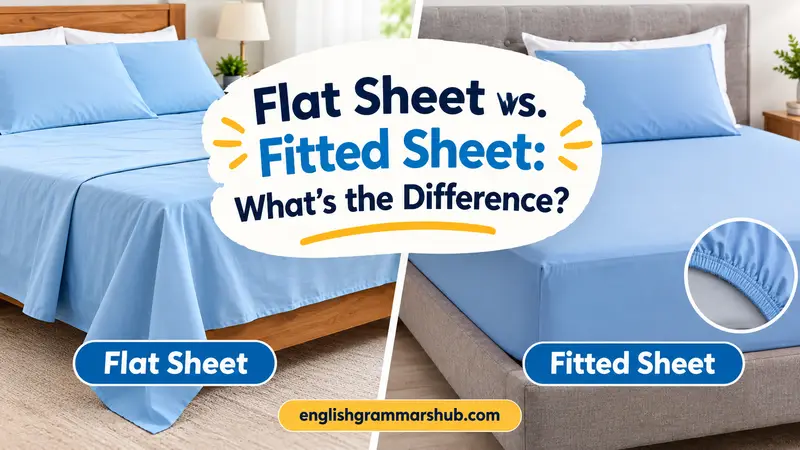
A flat sheet is a rectangular piece of fabric that lies between you and your blanket or comforter, while a fitted sheet covers the mattress and stays in place with elastic corners. Both are common bedding items, but they serve different purposes. A fitted sheet creates a smooth surface for sleeping, while a flat sheet adds a lightweight layer of comfort and helps keep heavier bedding cleaner.
Choosing between a flat sheet and a fitted sheet depends on how you make your bed, your sleeping habits, and the level of comfort you prefer. Understanding their differences can help you choose the right bedding without buying unnecessary extras.
Quick Answer
A flat sheet is a rectangular sheet that lies flat on the bed, while a fitted sheet has elastic edges that wrap around the mattress to keep it securely in place. A fitted sheet covers the mattress, whereas a flat sheet is commonly placed over the fitted sheet for added comfort and cleanliness.
Flat Sheet vs. Fitted Sheet at a Glance
The main difference between a flat sheet and a fitted sheet is their shape and purpose. A flat sheet has straight edges and no elastic, while a fitted sheet has elasticated corners designed to grip the mattress.
| Feature | Flat Sheet | Fitted Sheet |
| Shape | Flat rectangle | Shaped to fit a mattress |
| Elastic | No | Usually around the edges or corners |
| Main purpose | Adds a layer between you and other bedding | Covers the mattress |
| Placement | Above the fitted sheet | Directly over the mattress |
| Installation | Tucked or folded manually | Stretched over mattress corners |
| Stays in place | Depends on how it is tucked | Usually stays in place with elastic |
| Common use | Optional sleeping layer | Standard mattress covering |
| Washing | Usually easy to fold and store | May require more careful folding |
For most beds, a fitted sheet is the essential starting point because it covers the mattress and provides a comfortable sleeping surface. A flat sheet is optional, depending on your personal preference.
What Is a Flat Sheet?
A flat sheet is a single, rectangular piece of fabric without elasticated corners. It is designed to lie flat across your bed and can be tucked under the mattress to keep it in place.
Many people place a flat sheet directly over a fitted sheet and beneath a blanket, duvet, or comforter. This arrangement creates an extra layer between the sleeper and the heavier bedding.
Flat sheets are available in cotton, linen, microfiber, bamboo-derived fabrics, and other bedding materials. Their feel depends on the fabric, weave, and quality.
Common uses of a flat sheet
A flat sheet can serve several purposes:
- Extra comfort: It creates a lightweight layer between your body and a heavier blanket.
- Bedding protection: It can help reduce direct contact between your body and a comforter, keeping the comforter cleaner for longer.
- Temperature control: A lightweight sheet may provide enough coverage when a thick blanket feels too warm.
- Flexible styling: It can be folded over a blanket or tucked neatly around the mattress.
- Guest bedding: It provides an additional layer that can be washed separately from heavier bedding.
A flat sheet is especially useful if you enjoy layering your bedding or want a lighter alternative to sleeping directly under a duvet.
Advantages and disadvantages of a flat sheet
A flat sheet offers flexibility, but it can move around during the night.
Advantages
- Easy to remove, wash, fold, and store.
- Provides an additional layer without requiring a thick blanket.
- Can help protect heavier bedding from frequent direct contact.
- Works with different bedding arrangements.
Disadvantages
- Can become untucked while you sleep.
- Requires manual arranging to look neat.
- May feel unnecessary if you already use a duvet cover.
- Can bunch up if you move frequently during the night.
What Is a Fitted Sheet?
A fitted sheet is a mattress covering with elasticated edges or corners. Its design allows it to stretch over the mattress and stay in position during normal use.
Unlike a flat sheet, a fitted sheet is made to match specific mattress dimensions and depths. Choosing the right size helps prevent loose fabric, slipping corners, and uncomfortable wrinkles.
Fitted sheets are commonly made from cotton, cotton blends, microfiber, linen, and other fabrics. Some have deep pockets for thicker mattresses or mattresses with toppers.
Common uses of a fitted sheet
A fitted sheet serves as the main fabric layer covering your mattress.
- Mattress coverage: It covers the sleeping surface and helps protect it from everyday dirt and body oils.
- A smooth sleeping surface: It creates a consistent layer beneath your body.
- A secure fit: Elastic edges help keep the sheet from shifting.
- Easy bed-making: Once correctly fitted, it generally requires less adjustment than a flat sheet.
- Bedding organization: It creates a base for additional sheets, blankets, or a duvet.
A fitted sheet does not replace a mattress protector. If you need protection against spills, moisture, or allergens, choose a protector designed for that purpose.
Advantages and disadvantages of a fitted sheet
A fitted sheet is practical for everyday use, although the fit matters.
Advantages
- Stays in place better than an untucked flat sheet.
- Provides a dedicated cover for the mattress.
- Makes routine bed-making easier.
- Offers a smooth surface for sleeping when properly fitted.
Disadvantages
- Incorrect sizing can cause corners to slip off.
- Deep mattresses may require specially sized sheets.
- Folding fitted sheets neatly can take practice.
- Elastic may lose its stretch after repeated use and washing.
Can You Use a Flat Sheet Without a Fitted Sheet?
Yes, you can use a flat sheet without a fitted sheet, but it may not stay in place as easily.
A flat sheet can be tucked tightly around a mattress to create a basic covering. However, it lacks the elastic edges that help a fitted sheet remain secure when you move during sleep.
If you use only a flat sheet, make sure it covers the entire sleeping surface and can be tucked securely beneath the mattress. A mattress protector may still be helpful if you want to protect the mattress itself.
For everyday convenience, a fitted sheet is generally the better choice for covering the mattress. A flat sheet works well as an additional layer rather than a direct replacement.
Can You Use a Fitted Sheet Without a Flat Sheet?
Yes. A fitted sheet can be used on its own without a flat sheet.
Many people prefer this arrangement because it reduces the number of bedding layers and makes the bed easier to maintain. You can sleep directly on the fitted sheet and use a blanket, duvet, or comforter above you.
Skipping the flat sheet may also be practical if you dislike fabric bunching around your legs or prefer a simpler sleeping setup.
The main consideration is how you clean your bedding. Without a flat sheet, your duvet or blanket may have more direct contact with your body, so you may need to wash it more frequently, depending on its care instructions and your personal habits.
Which Sheet Goes on the Bed First?
The fitted sheet goes on the mattress first. The flat sheet, if you use one, goes on top of it.
A typical bedding arrangement follows this order:
- Mattress: The base of the bed.
- Mattress protector: An optional protective layer placed over the mattress.
- Fitted sheet: The main sheet stretched over the mattress.
- Flat sheet: An optional layer placed above the fitted sheet.
- Blanket, duvet, or comforter: The top layer used for warmth.
You do not need every layer. A fitted sheet with a comforter is enough for many sleepers, while others prefer the extra layer of a flat sheet.
Flat Sheet vs. Fitted Sheet: Which Is Better for You?
Neither sheet is universally better because each serves a different purpose. A fitted sheet is generally the practical choice for covering your mattress, while a flat sheet is useful if you want an extra layer.
Choose a fitted sheet if you:
- Want bedding that stays in place.
- Prefer a smooth surface beneath your body.
- Want to make your bed quickly.
- Do not want to tuck fabric around the mattress every day.
Choose a flat sheet if you:
- Prefer a lightweight layer between you and your comforter.
- Want more flexibility when layering bedding.
- Like to sleep with a sheet rather than a heavier blanket.
- Want a removable layer that is easy to wash.
Consider using both if you want a traditional layered bed. If you prefer minimal bedding, a fitted sheet and a separate blanket or duvet may be all you need.
How to Choose the Right Sheet Size
Selecting the correct size matters for both flat and fitted sheets, but fitted sheets require particular attention to mattress depth.
Measure your mattress
Check your mattress’s length, width, and depth before buying sheets. Standard labels such as Twin, Full, Queen, and King help identify the general size, but dimensions can vary by manufacturer and bedding market.
For a fitted sheet, measure the mattress from the top surface to the bottom edge. Include any mattress topper that will remain underneath the sheet, and check the manufacturer’s pocket-depth specifications.
A sheet that is too shallow may pull away from the corners. One that is too large may fit loosely and create wrinkles.
Check the fabric
Fabric affects how a sheet feels, breathes, and holds up over time.
- Cotton: A widely used option with a range of textures and weights.
- Linen: Often valued for its relaxed texture and airflow.
- Microfiber: Usually lightweight and smooth, with care and breathability varying by product.
- Cotton blends: Combine cotton with other fibers to change durability, texture, or wrinkle resistance.
Neither a flat sheet nor a fitted sheet is automatically more comfortable because of its shape. Fabric quality and personal preference matter more.
Common Mistakes When Buying Sheets
A few simple checks can prevent uncomfortable bedding and unnecessary purchases.
Buying the wrong fitted-sheet depth: A sheet may match your mattress width and length but still be too shallow. Check the pocket depth before ordering.
Assuming a flat sheet is required: A flat sheet is optional. You can use a fitted sheet with a blanket or duvet if that arrangement suits you.
Ignoring fabric care: Some materials need gentle washing or specific drying conditions. Follow the care label to help preserve the fabric and elastic.
Confusing a sheet with a mattress protector: A regular sheet provides a fabric surface, but it is not necessarily waterproof or designed to protect against spills.
Choosing based on appearance alone: A neatly made bed is useful, but your sleeping comfort, climate, and washing routine should guide your decision.
FAQs
Is a flat sheet the same as a top sheet?
Yes. In American bedding terminology, a flat sheet is commonly called a top sheet because it lies above the fitted sheet and beneath the blanket or comforter. The terms usually refer to the same type of bedding.
Do you really need a flat sheet?
No. A flat sheet is optional. Some people enjoy the additional layer, while others prefer to sleep with a fitted sheet and a duvet or blanket. The best arrangement depends on your comfort and cleaning preferences.
Is a fitted sheet better than a flat sheet?
A fitted sheet is generally better for covering the mattress because its elastic edges help it stay in place. A flat sheet is better suited to providing an additional lightweight layer. They are designed for different purposes, so one does not completely replace the other.
Can you put a flat sheet over a fitted sheet?
Yes. This is a common bedding arrangement. Place the flat sheet over the fitted sheet, align the upper edges near the head of the bed, and tuck the sides and foot underneath the mattress if desired.
Why does my fitted sheet keep coming off?
A fitted sheet may come off if it is too small, has insufficient pocket depth, or has worn elastic. A thick mattress or topper can also affect the fit. Check the mattress dimensions and sheet specifications before replacing it.
Which sheet is easier to wash?
Both are generally easy to washwhen you follow their care labels. Flat sheets are usually easier to fold and store, while fitted sheets can take more effort to fold because of their elastic corners.
Conclusion
The main difference between a flat sheet and a fitted sheet is their design and function. A fitted sheet covers the mattress and helps stay in place, while a flat sheet adds an optional layer between you and your blanket or comforter.
For most people, a fitted sheet is the essential choice for everyday bedding. Add a flat sheet if you enjoy extra coverage, want a separate layer for sleeping, or prefer a traditional layered bed. You can also skip it entirely if a simpler arrangement feels more comfortable. Choose the setup that suits your sleeping habits, mattress, and laundry routine.