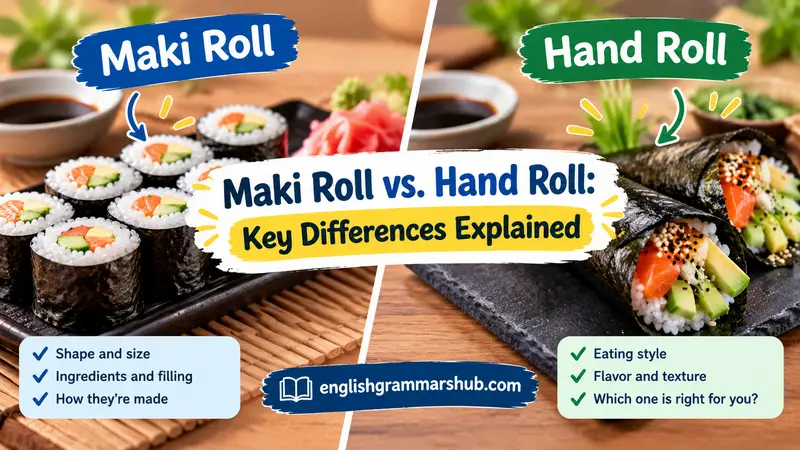
Maki rolls and hand rolls are two popular types of sushi, but they differ in shape, preparation, and how they’re eaten. A maki roll is cylindrical and cut into bite-sized pieces, while a hand roll, also called temaki, is shaped like a cone and usually eaten by hand. Both can contain sushi rice, seaweed, fish, or vegetables. Understanding the difference between maki roll vs. hand roll can help you choose the right sushi for your taste, whether you prefer small bites to share or a freshly made roll to enjoy on your own.
Quick Answer
A maki roll is sushi rolled into a cylindrical shape, usually with a bamboo mat, and cut into bite-sized pieces. A hand roll, also called temaki, is made by wrapping sushi rice and fillings in nori seaweed to form a cone. Maki is designed for sharing or eating piece by piece, while hand rolls are typically eaten whole by hand.
Maki Roll vs. Hand Roll at a Glance
| Feature | Maki Roll | Hand Roll |
| Shape | Cylinder | Cone |
| Japanese name | Makizushi | Temaki |
| Preparation | Usually rolled with a bamboo mat | Rolled by hand |
| Cutting | Cut into individual pieces | Usually served whole |
| Seaweed | Wraps around the rice and fillings or appears inside | Forms the outer cone |
| Eating style | Usually with chopsticks | Usually with your hands |
| Best for | Sharing, appetizers, and sushi platters | Casual meals and individual servings |
What Is a Maki Roll?
A maki roll is a traditional Japanese sushi preparation made by rolling sushi rice and fillings in a sheet of nori seaweed. The roll is then sliced into smaller, round or rectangular pieces.
Maki is one of the most familiar types of sushi served in Japanese restaurants. Its compact shape makes it easy to arrange on a platter and share with other people.
Common maki roll ingredients include:
- Sushi rice
- Nori seaweed
- Cucumber
- Avocado
- Salmon
- Tuna
- Cooked shrimp
- Crab or imitation crab
Some maki rolls contain raw fish, while others use cooked seafood or vegetables.
Popular Types of Maki Rolls
Hosomaki: A thin roll that usually contains one main filling, such as cucumber or tuna.
Futomaki: A thicker roll with several fillings, often including vegetables and other ingredients.
Uramaki: An inside-out roll with rice on the outside and nori surrounding the fillings. The California roll is a familiar example.
These styles differ in size and arrangement, but they all belong to the broader family of rolled sushi.
What Is a Hand Roll?
A hand roll, known in Japanese as temaki, is a cone-shaped sushi preparation made by wrapping nori around sushi rice and fillings.
Unlike a typical maki roll, a hand roll is not cut into several pieces. The open end allows you to see the ingredients, and the cone makes it convenient to hold while eating.
Common fillings include:
- Salmon and avocado
- Spicy tuna
- Cucumber and avocado
- Shrimp tempura
- Crab and vegetables
Hand rolls are often prepared shortly before serving because the nori tastes best when it remains crisp.
Why Hand Rolls Have a Cone Shape
The cone helps hold the rice and fillings together while leaving one end open for eating. It also gives the ingredients a more casual, handheld presentation.
The shape is practical, not just decorative. It makes hand rolls easy to enjoy without cutting them into separate portions.
Five Key Differences Between Maki and Hand Rolls
1. Shape and Size
The most obvious difference is their shape.
Maki rolls are cylindrical. Once sliced, they produce several individual pieces that are generally similar in size.
Hand rolls are cone-shaped and usually larger than one maki slice. Their size and shape make them suitable for eating as an individual serving.
2. How They Are Made
Maki rolls are commonly assembled on a bamboo rolling mat. The cook places rice and fillings on nori, rolls everything tightly, and cuts the finished roll into pieces.
Hand rolls are shaped by hand. The cook arranges the rice and fillings on nori and folds or rolls it into a cone.
Both require care to keep the ingredients together, but their shaping techniques differ.
3. How They Are Served
Maki rolls are typically served as a plate of individual pieces. This makes them easy to share or combine with other sushi varieties.
Hand rolls are usually served individually and eaten directly from the hand. They are particularly popular in casual sushi settings where freshly made food is served one roll at a time.
4. Texture and Seaweed
The seaweed can feel different depending on how each sushi style is prepared and served.
Maki rolls often have nori that has softened slightly from contact with the rice and fillings. The exact texture depends on the ingredients and the time between preparation and eating.
Hand rolls are often served immediately to preserve the crispness of the nori. As you eat, the seaweed may gradually soften from the moisture in the rice and fillings.
Neither style is automatically better. The difference mainly comes down to freshness and preparation.
5. Eating Experience
Maki is convenient when you want several small bites. You can sample different fillings, share a platter, or eat a few pieces alongside other Japanese dishes.
Hand rolls provide a more direct, handheld experience. You can bite into the cone and enjoy the rice, seaweed, and fillings together.
Choose maki when variety and sharing matter most. Choose a hand roll when you prefer a freshly assembled, individual serving.
Which Is Healthier: Maki or Hand Roll?
Neither maki rolls nor hand rolls are automatically healthier. Their nutritional value depends on their ingredients, portion sizes, sauces, and preparation methods.
A vegetable maki roll with cucumber and avocado may provide fiber and unsaturated fats. A hand roll containing salmon can provide protein and beneficial omega-3 fats.
However, rolls with fried seafood, creamy sauces, or generous amounts of mayonnaise may contain more calories and fat.
For a lighter choice:
- Choose vegetables, lean seafood, or simple fish fillings.
- Ask for sauces on the side.
- Limit fried fillings if you want to reduce added fat.
- Consider how much rice you eat across the entire meal.
The format alone does not determine nutritional value. Compare the actual ingredients and serving sizes.
Which Should You Order?
The best choice depends on what you want from your meal.
| Your Preference | Better Choice |
| Sharing sushi with friends | Maki roll |
| Trying several different fillings | Maki roll |
| Eating sushi in small bites | Maki roll |
| Enjoying crisp nori | Freshly made hand roll |
| Having a handheld individual serving | Hand roll |
| Choosing between different preparation styles | Try both |
If you are new to sushi, cucumber maki or a California roll can be an approachable starting point. If you enjoy fresh seafood and crisp seaweed, try a salmon or tuna hand roll.
You do not have to choose just one. Ordering both is a simple way to compare their textures and presentation.
Common Misconceptions About Maki and Hand Rolls
Maki and hand rolls are not two completely different categories of food. Both are forms of rolled sushi, but they use different shaping and serving styles.
A hand roll is not simply a large maki roll. Its cone shape, open end, and handheld serving style make it distinct.
Not every sushi roll contains raw fish. Both maki and hand rolls can feature cooked seafood, vegetables, or other fillings.
Hand rolls are not necessarily healthier. Ingredients and portion sizes matter more than the shape of the sushi.
Maki does not always have rice on the outside. Traditional maki often has nori on the outside, while uramaki places rice on the exterior.
FAQs
Is a hand roll the same as a maki roll?
No. Both are types of rolled sushi, but a maki roll is usually cylindrical and cut into pieces, while a hand roll is shaped into a cone and served whole.
Why are hand rolls eaten with your hands?
Their cone shape makes them easy to hold and bite into. Eating a hand roll by hand is a practical way to enjoy its rice, nori, and fillings together.
Do maki rolls and hand rolls use the same ingredients?
Yes, they can. Both may contain sushi rice, nori, fish, vegetables, and cooked seafood. The main differences are their shape, preparation, and serving style.
Which is better for beginners?
Maki rolls are often easier for beginners who want small, bite-sized portions and a chance to try different fillings. A simple hand roll is also a good option if you prefer a handheld meal.
What is a Japanese hand roll called?
A Japanese hand roll is called temaki. The name refers to hand-rolled sushi, which is typically shaped into a cone and eaten without cutting it into separate pieces.
Conclusion
The main difference between a maki roll and a hand roll is their shape and serving style. Maki rolls are cylindrical, sliced into bite-sized pieces, and ideal for sharing or sampling different fillings. Hand rolls are cone-shaped, served whole, and designed to be eaten by hand.
If you prefer small portions and variety, choose maki. If you enjoy crisp seaweed and a freshly assembled individual serving, try a hand roll. Both offer delicious ways to enjoy sushi, so your choice comes down to your preferred texture, ingredients, and eating experience.