
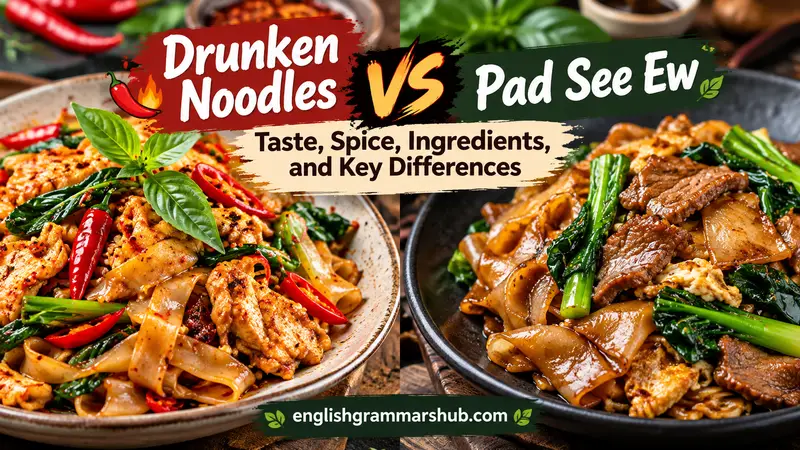
Drunken noodle vs Pad See Ew is a popular Thai food comparison for anyone choosing between two delicious stir-fried noodle dishes. Drunken noodles (Pad Kee Mao) offer bold, spicy flavors with fresh basil, while Pad See Ew features a sweeter, savory taste with wide rice noodles and Chinese broccoli. Understanding their differences in flavor, ingredients, spice level, and texture will help you choose the dish that suits your taste.
Quick Answer
The main difference between drunken noodles and pad see ew is their flavor.
Drunken noodles are spicy and aromatic, combining fresh chilies, garlic, basil, and savory sauces. Pad see ew is mild and sweet-savory, featuring dark soy sauce, Chinese broccoli, and egg.
Both dishes commonly use wide rice noodles, but drunken noodles deliver a stronger chili and herbal flavor. Pad see ew offers a smoother, richer taste with lightly caramelized noodles.
If you enjoy spicy Thai food, choose drunken noodles. If you prefer mild noodles with a touch of sweetness, pad see ew is often the better option.
Drunken Noodles vs Pad See Ew: Comparison Table
| Feature | Drunken Noodles | Pad See Ew |
| Thai name | Pad Kee Mao | Pad See Ew |
| Origin | Thailand | Thailand |
| Main flavor | Spicy, savory, herbal | Savory, slightly sweet |
| Spice level | Usually medium to hot | Usually mild |
| Noodles | Wide, flat rice noodles | Wide, flat rice noodles |
| Main sauce | Savory soy-based seasoning with chili | Light and dark soy-based seasoning |
| Key herb | Holy basil or Thai basil | Usually none |
| Common vegetables | Chilies, peppers, baby corn, greens | Chinese broccoli |
| Egg | Optional, depending on recipe | Common ingredient |
| Protein | Chicken, beef, shrimp, pork, or tofu | Chicken, beef, shrimp, pork, or tofu |
| Texture | Chewy noodles with aromatic vegetables | Soft, chewy noodles with browned edges |
| Best for | Spicy food lovers | Mild food lovers |
Although these differences are common, recipes vary among Thai restaurants. Some kitchens adjust ingredients, sweetness, and spice to suit local tastes.
What Are Drunken Noodles?
Drunken noodles, known in Thailand as pad kee mao, are a popular stir-fried noodle dish recognized for their bold seasoning and spicy taste.
The dish commonly contains wide rice noodles, fresh chilies, garlic, basil, vegetables, and protein.
Unlike some sweeter Thai noodle dishes, drunken noodles emphasize savory and herbal flavors.
Common Ingredients in Drunken Noodles
- Wide, flat rice noodles
- Fresh garlic and Thai chilies
- Holy basil or Thai basil
- Soy sauce and oyster sauce
- Fish sauce in many recipes
- Bell peppers, baby corn, or other vegetables
- Chicken, beef, shrimp, pork, or tofu
The specific ingredients depend on the cook and restaurant.
What Do Drunken Noodles Taste Like?
Drunken noodles taste spicy, savory, and aromatic. Garlic provides a strong base, while fresh chilies add heat.
Basil gives the dish a distinctive herbal aroma. Depending on the variety used, it may contribute peppery, slightly sweet, or anise-like notes.
The sauce coats the noodles without necessarily making them overly wet. High-heat stir-frying can also create lightly browned edges.
As a result, each bite combines chewy noodles, bold seasonings, and fragrant herbs.
Why Are They Called Drunken Noodles?
Despite their name, drunken noodles do not normally contain alcohol.
Several popular explanations connect the name with food eaten alongside alcoholic drinks or prepared for people who had been drinking.
However, the exact origin of the English name is not firmly established.
The important point for diners is simple: drunken noodles are not an alcoholic dish by default.
What Is Pad See Ew?
Pad see ew is a Thai stir-fried noodle dish known for its rich soy sauce flavor, tender rice noodles, and slightly sweet finish.
Its name refers to stir-frying with soy sauce, which plays a central role in the dish.
Traditional versions commonly feature wide rice noodles, Chinese broccoli, egg, and meat.
Unlike drunken noodles, pad see ew generally does not rely on fresh chilies or basil for flavor.
Common Ingredients in Pad See Ew
- Wide, flat rice noodles
- Light and dark soy sauce
- Chinese broccoli, also called gai lan
- Eggs
- Garlic
- Sugar or sweet dark soy sauce
- Chicken, pork, beef, shrimp, or tofu
- Oyster sauce in many recipes
Chinese broccoli provides a gentle bitterness that balances the savory and sweet seasonings.
What Does Pad See Ew Taste Like?
Pad see ew tastes savory, slightly sweet, and rich.
Dark soy sauce gives the noodles their distinctive brown color. Sweetness balances the salty ingredients, while garlic adds depth.
When the cook uses a sufficiently hot wok, some noodles develop lightly charred edges and a pleasant roasted aroma.
The overall taste is typically less intense than drunken noodles.
For people who dislike spicy food, pad see ew is often an appealing introduction to Thai stir-fried noodles.
7 Key Differences Between Drunken Noodles and Pad See Ew
Flavor: Spicy and Herbal vs Sweet and Savory
Flavor is the most noticeable difference.
Drunken noodles combine garlic, chilies, basil, and savory seasonings. Their taste is powerful and aromatic, with a noticeable spicy kick.
Pad see ew relies more heavily on soy sauce, gentle sweetness, and high-heat browning.
Its flavor is rich without usually being hot.
For example, someone who enjoys spicy basil chicken may appreciate the similar herbal and chili flavors in drunken noodles.
A person who prefers mild soy-seasoned noodles may enjoy pad see ew more.
Spice Level: Hot vs Mild
Drunken noodles are usually much spicier than pad see ew.
Fresh Thai chilies are an important part of many pad kee mao recipes. Depending on the quantity, they can create moderate or intense heat.
Pad see ew normally contains little or no chili in its basic preparation.
However, diners can add dried chili flakes or other Thai condiments.
| Spice preference | Better choice |
| No spice | Pad see ew |
| Mild flavor | Pad see ew |
| Medium heat | Drunken noodles with reduced chili |
| Strong heat | Drunken noodles |
| Customizable heat | Either, depending on the restaurant |
Restaurant spice ratings are not standardized. Always ask about the heat level if you are sensitive to chili.
Sauce: Chili-Seasoned vs Soy-Focused
Both dishes use savory seasonings, but their sauces create different results.
Drunken noodle sauce often includes soy sauce, oyster sauce, and sometimes fish sauce. Fresh garlic, chilies, and basil help define the final flavor.
Pad see ew places greater emphasis on light and dark soy sauces, sometimes balanced with sugar.
The dark soy sauce contributes color and sweetness, while high-heat cooking develops additional flavor.
Neither dish has one universal sauce formula. Home cooks and restaurants often make adjustments.
Vegetables and Herbs
The vegetables provide another useful way to recognize each dish.
Drunken noodles often contain a colorful mixture of vegetables. Common additions include bell peppers, baby corn, green beans, and leafy greens.
Basil is especially important to the dish’s aroma.
Pad see ew traditionally features Chinese broccoli, which has tender leaves and firm stems.
Egg is also a familiar part of pad see ew.
The combination gives the dish a relatively simple appearance compared with many restaurant versions of drunken noodles.
Noodle Type and Texture
Both dishes commonly use sen yai, the Thai name for wide rice noodles.
These noodles are soft, slippery, and pleasantly chewy.
Drunken noodles may feel more varied in texture because the noodles are mixed with chilies, herbs, and vegetables.
Pad see ew often emphasizes noodles with browned surfaces and a smooth coating of sauce.
High-heat cooking matters for both dishes.
A well-prepared version may develop a subtle smoky aroma from contact with the hot wok. However, this depends on cooking equipment and technique.
Appearance and Presentation
You can often distinguish the dishes by looking at their ingredients.
Drunken noodles commonly contain visible basil leaves, chili pieces, and mixed vegetables.
Pad see ew usually appears darker and more uniform because soy sauce coats the wide noodles.
Chinese broccoli and egg are frequent visual clues.
Still, appearance alone is not always reliable. Restaurants may use different noodle shapes, vegetables, or sauces.
Overall Eating Experience
Drunken noodles provide a lively combination of spicy heat, fragrant herbs, and chewy noodles.
The chili flavor tends to remain noticeable throughout the meal.
Pad see ew delivers a gentler experience.
Its soy-rich sauce, egg, and soft noodles create a comforting dish that does not depend on intense spice.
Neither is automatically better. The choice comes down to your preferences.
Which Is Healthier: Drunken Noodles or Pad See Ew?
Neither drunken noodles nor pad see ew is automatically healthier.
Their nutritional value depends on portion size, cooking oil, sauces, vegetables, and protein.
Both dishes primarily use rice noodles, which provide carbohydrates. Sauces can contribute substantial sodium, especially when soy sauce, oyster sauce, or fish sauce is used.
Nutrition Comparison
| Nutritional factor | Drunken Noodles | Pad See Ew |
| Carbohydrates | Generally high | Generally high |
| Protein | Depends on added protein | Depends on added protein |
| Fat | Depends on oil and meat | Depends on oil and meat |
| Sodium | Can be high | Can be high |
| Added sugar | Recipe-dependent | Often used for sweetness |
| Vegetables | Often mixed varieties | Commonly Chinese broccoli |
| Calories | Portion- and recipe-dependent | Portion- and recipe-dependent |
There is no reliable universal calorie difference between the dishes.
A large restaurant serving of either can contain considerably more calories than a smaller homemade portion.
How to Make Either Dish More Balanced
Choose a serving with plenty of vegetables and a protein such as chicken, shrimp, or tofu.
You can also request less sauce or oil where restaurants allow customization.
If sodium is a concern, keep in mind that reducing the sauce may change the dish’s flavor.
For a more balanced meal, portion size and ingredients matter more than the name of the noodle dish.
Are Drunken Noodles or Pad See Ew Gluten-Free?
Both dishes commonly use rice noodles, which are naturally gluten-free when made only from rice and water.
However, the finished dishes are not automatically gluten-free.
Traditional soy sauce often contains wheat. Oyster sauce and other prepared seasonings may also contain gluten-containing ingredients.
Restaurants may use the same cooking equipment for wheat-based foods, creating a risk of cross-contact.
If you need to avoid gluten, ask about the noodles, sauces, and preparation methods.
A gluten-free version requires suitable ingredients and careful handling.
Are Drunken Noodles and Pad See Ew Vegetarian?
Both dishes can be prepared without meat, but ordering tofu does not automatically make them vegetarian.
Many recipes include oyster sauce or fish sauce.
Pad see ew also commonly contains egg, which some vegetarians eat and others avoid.
For a vegetarian dish, ask the restaurant to omit fish sauce and use a vegetarian alternative to oyster sauce.
For a vegan version, the kitchen must also leave out egg and any other animal-derived ingredients.
Ingredient checks are especially helpful because sauces are not always listed on restaurant menus.
Drunken Noodles vs Pad See Ew vs Pad Thai
Another common source of confusion is pad Thai.
Although all three are popular Thai noodle dishes, their flavors and ingredients differ.
| Feature | Drunken Noodles | Pad See Ew | Pad Thai |
| Main taste | Spicy, savory, herbal | Mild, sweet-savory | Sweet, sour, savory |
| Common noodles | Wide rice noodles | Wide rice noodles | Narrower rice noodles |
| Main flavor ingredients | Chilies and basil | Soy sauce | Tamarind and other seasonings |
| Typical vegetables | Mixed vegetables | Chinese broccoli | Bean sprouts and chives |
| Common toppings | Basil | Usually no special topping | Peanuts and lime |
| Spice level | Usually spicy | Usually mild | Usually mild, adjustable |
Pad Thai typically gets its tangy flavor from tamarind. Many versions include crushed peanuts and lime.
Pad see ew offers a darker, soy-forward flavor, while drunken noodles emphasize chili and basil.
Therefore, people who enjoy sweet-and-sour flavors may prefer pad Thai over either of the other two dishes.
Which Should You Order: Drunken Noodles or Pad See Ew?
The best choice depends on what you want from your meal.
Choose Drunken Noodles If You:
- Enjoy spicy food
- Love fresh basil and garlic
- Prefer stronger savory flavors
- Want noodles with mixed vegetables
- Enjoy aromatic Thai stir-fries
Choose Pad See Ew If You:
- Prefer mild food
- Enjoy rich soy sauce flavors
- Like slightly sweet noodles
- Want egg and Chinese broccoli
- Prefer a comforting noodle dish
If you are trying Thai noodles for the first time and dislike heat, pad see ew may be the easier choice.
If you already enjoy spicy Thai curries or basil stir-fries, drunken noodles may be more appealing.
Common Mistakes When Comparing These Thai Noodles
One mistake is assuming that drunken noodles contain alcohol. The name does not describe a standard alcoholic ingredient.
Another misunderstanding is that pad see ew and drunken noodles use completely different noodles. Both commonly rely on wide rice noodles.
Some diners also assume pad see ew must be extremely sweet. In reality, it usually combines sweetness with salty soy flavors and browned noodles.
Finally, not every restaurant prepares these dishes identically.
A Thai restaurant in the United States may offer adaptations that differ from traditional Thai preparations.
Checking the menu description is the most reliable way to understand what you are ordering.
FAQs
Is pad see ew or drunken noodles better?
Neither dish is universally better. Drunken noodles are often the better choice for people who enjoy spicy, garlicky flavors and fresh basil. Pad see ew suits diners who prefer milder, soy-rich noodles with a touch of sweetness. Your favorite will depend on your preferred spice level and flavor.
Which is spicier, drunken noodles or pad see ew?
Drunken noodles are generally spicier because they commonly contain fresh Thai chilies. Pad see ew is traditionally mild, although diners can add chili flakes or spicy condiments. Restaurants may also prepare either dish according to a requested spice level.
Are drunken noodles sweeter than pad see ew?
Pad see ew usually tastes sweeter than drunken noodles. Sweet dark soy sauce or added sugar often contributes mild sweetness. Drunken noodles may contain sugar, but chili, garlic, basil, and savory sauces tend to dominate their flavor.
Do drunken noodles contain alcohol?
No, drunken noodles do not normally contain alcohol. Their English name has several possible explanations, including an association with eating spicy food while drinking. The exact historical reason for the name remains uncertain. If avoiding alcohol is essential, check the restaurant’s specific recipe.
Are drunken noodles and pad see ew made with the same noodles?
Yes, both dishes commonly use wide, flat rice noodles known as sen yai. These noodles have a soft and chewy texture. Some restaurants substitute different rice noodle sizes, but wide noodles remain a familiar feature of both dishes.
Is pad see ew good for people who dislike spicy food?
Yes, pad see ew is usually a good option for people who dislike spicy food. Its main flavors come from soy sauce, garlic, egg, and Chinese broccoli rather than fresh chilies. However, it is worth confirming the restaurant’s preparation because recipes can vary.
Can I make drunken noodles without basil?
Yes, you can prepare a spicy noodle stir-fry without basil, but it will lose an important part of the characteristic pad kee mao flavor. Holy basil is especially associated with traditional versions, while Thai basil is a common alternative. Omitting it produces a noticeably different dish.
Conclusion
When comparing drunken noodles vs pad see ew, the biggest differences are spice, sauce, and herbs.
Drunken noodles offer a bold combination of chilies, garlic, basil, and savory seasonings. Pad see ew provides a milder experience with soy sauce, egg, Chinese broccoli, and slightly sweet noodles.
Both dishes commonly use wide rice noodles, and both can be prepared with different proteins and vegetables.
Choose drunken noodles for heat and fragrant herbs. Choose pad see ew for rich, mild, soy-based comfort food.
The next time you visit a Thai restaurant, consider your preferred flavor and spice level before placing your order.