
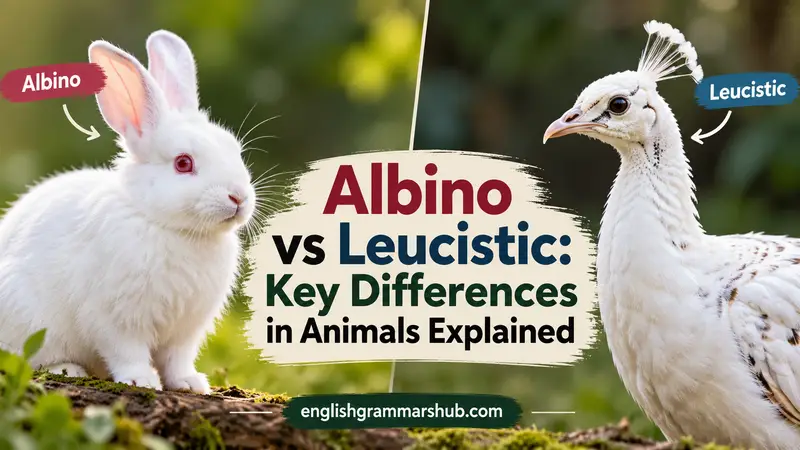
Albino vs leucistic is a common comparison when people discover an unusually white bird, deer, snake, or other animal. Although both conditions can make animals appear pale or completely white, they are not the same.
Albinism affects the production of melanin, a pigment responsible for many dark colors in the body. Leucism affects how pigment develops or appears in certain tissues, often causing white patches or an entirely pale coat, skin, or feathers.
The easiest difference to notice is usually eye color. Albino animals often have pinkish or reddish-looking eyes, while leucistic animals generally keep their normal eye pigmentation.
However, appearance alone does not always reveal the exact condition. Understanding how pigmentation works makes identification much easier.
Quick Answer
The main difference between albino and leucistic animals is how their pigmentation is affected. Albinism reduces or prevents melanin production, often changing the eyes as well as the body. Leucism causes pigment loss in certain tissues but usually leaves eye pigmentation normal. Both conditions can produce white animals, so eye color is an important clue, not absolute proof.
Albino vs Leucistic: Comparison Table
| Feature | Albino | Leucistic |
| Main cause | Reduced or absent melanin production | Abnormal pigment-cell development or pigment distribution |
| Body appearance | White, cream, pale, or sometimes colored | White, pale, or patchy |
| Eye color | Often pinkish, reddish, or unusually light | Usually normal for the species |
| Pigment affected | Melanin | Pigmentation in affected tissues |
| White patches | Not the defining feature | Common in partial leucism |
| Completely white body | Possible | Possible |
| Genetic influence | Inherited genetic changes | Often inherited developmental differences |
| Vision problems | More likely | Not usually caused directly by leucism |
| Examples | Albino rabbits, snakes, and birds | White deer, pale birds, and some reptiles |
Key takeaway: A white animal with normally pigmented eyes may be leucistic, but other color conditions can produce the same appearance.
What Does Albino Mean?
An albino animal has albinism, a genetic condition that affects the body’s ability to make melanin.
Melanin provides much of the black, brown, and related coloring found in animal hair, feathers, skin, scales, and eyes.
When melanin production is greatly reduced or absent, an animal can develop unusually pale coloring.
Common Characteristics of Albino Animals
Albino animals may have:
- White or very pale fur, feathers, or scales.
- Pinkish skin in areas with little pigment.
- Red, pink, or unusually light-looking eyes.
- Greater sensitivity to bright sunlight.
- Vision problems linked to reduced eye pigmentation.
These characteristics vary depending on the species and type of albinism.
An albino rabbit, for example, may have white fur and pink-looking eyes. Meanwhile, an albino snake can still display yellow or orange markings.
That happens because some animals produce pigments other than melanin.
Are All Albino Animals Completely White?
No. An albino animal does not have to be entirely white.
Albinism primarily affects melanin, but certain birds, reptiles, and other animals have additional pigments.
For example, carotenoid pigments can create yellow, orange, and red colors even when melanin is missing.
This explains why some albino snakes retain bright yellow patterns rather than appearing completely colorless.
Being albino means having a melanin-production condition, not simply having a white body.
What Does Leucistic Mean?
Leucistic describes an animal with unusually reduced or missing pigmentation in certain tissues.
This condition often results from differences in the development, movement, or presence of pigment-producing cells.
Unlike albinism, leucism usually does not affect pigmentation inside the eyes.
A leucistic animal can therefore have white fur or feathers while retaining dark eyes.
Common Characteristics of Leucistic Animals
Leucistic animals may display:
- Completely white fur, feathers, or scales.
- White patches mixed with normal coloring.
- Pale or washed-out body coloration.
- Normally pigmented eyes.
- Unusual color patterns that differ from other members of the species.
The extent of pigment loss varies greatly.
Some animals have only a few white feathers. Others appear almost entirely white.
Partial vs Complete Leucism
Leucism can affect a small area or much of an animal’s body.
Partial leucism involves pigmentation loss in specific areas. A dark-colored bird might develop white wing feathers while retaining its normal head and body colors.
Complete leucism involves pigment loss throughout most or all of the affected body covering. The animal may appear completely white while retaining normal eye pigmentation.
Both forms differ from albinism because of the underlying pigmentation process.
In practice, wildlife researchers sometimes use the word leucism broadly, especially when describing unusual bird plumage. Other pigment conditions can look similar, so the term should be used carefully.
Why Do Albino and Leucistic Animals Look Different?
The difference begins with how animal bodies create and distribute color.
Many animals rely on specialized cells called melanocytes to produce melanin. This pigment helps create brown, black, and other dark shades.
Albinism and leucism affect this system in different ways.
How Albinism Affects Melanin
In animals with albinism, genetic changes interfere with proteins involved in producing melanin.
The pigment-producing cells may still exist, but their ability to make melanin is reduced or blocked.
This can affect:
- Skin and fur pigmentation.
- Feather and scale coloration.
- Pigmentation within the eyes.
- Normal visual development.
Different forms of albinism affect pigment production to different degrees. Some cause a nearly complete absence of melanin, while others allow small amounts to develop.
How Leucism Affects Pigment Cells
Leucism usually involves abnormal development or distribution of pigment cells.
For example, certain pigment-producing cells may fail to reach parts of an animal’s skin during development.
The affected areas then appear white because they lack the cells needed to produce or deposit normal pigmentation.
However, other regions may retain their usual coloring.
This explains why a leucistic animal might have a white body, dark eyes, and several normally colored patches.
The scientific distinction: Albinism mainly involves melanin production, while leucism generally involves pigment-cell development or distribution.
Albino vs Leucistic Eyes: The Most Important Difference
Eye color is one of the most useful clues when comparing albino and leucistic animals.
In many animals, the eyes contain melanin that helps give the iris its normal appearance.
When this pigment is missing, the underlying blood vessels may become more visible.
That can produce a pinkish or reddish appearance.
What Color Are Albino Eyes?
Albino animals often have unusually light eyes.
Depending on the species and amount of remaining pigment, the eyes may appear:
- Pink.
- Red.
- Pale blue.
- Grayish or unusually light.
Not every albino animal has bright red eyes.
In people with albinism, for example, the eyes may look blue, gray, or another color depending on the condition and remaining pigmentation.
Therefore, red eyes are a strong clue in many animals, but they are not required in every case.
What Color Are Leucistic Eyes?
Leucistic animals generally retain normal eye pigmentation.
A leucistic bird might have pure white feathers but still possess the dark eyes typical of its species.
Similarly, a white deer with normally pigmented eyes may have leucism or another white-color variation rather than albinism.
Some captive-bred reptiles also display unusual eye colors without having albinism.
Can a Leucistic Animal Have Blue Eyes?
Yes. Certain leucistic animals can have blue eyes.
Blue-eyed leucistic ball pythons are a familiar example from reptile breeding.
Their appearance does not automatically mean they have albinism.
This is why the simple rule that red eyes mean albino and dark eyes mean leucistic is useful but incomplete.
How to Identify an Albino or Leucistic Animal
You can often make an informed guess by examining several physical features.
Check the eye color.
Pinkish or reddish eyes may suggest albinism. Normally pigmented eyes point toward leucism or another condition.
Examine the body pattern.
Irregular white patches mixed with normal colors can suggest partial leucism or a related pigment variation.
Consider the animal’s species.
Some animals are naturally white. A white polar bear or snowy owl is not automatically albino or leucistic.
Avoid making a diagnosis from appearance alone.
Genetics, developmental history, and specialist examination may be necessary to identify the condition accurately.
For wildlife observers, photographs showing both the animal’s eyes and overall body pattern are especially helpful.
Avoid approaching or disturbing a wild animal simply to examine its unusual coloring.
Examples of Albino and Leucistic Animals
Both conditions occur across different animal groups, including mammals, birds, and reptiles.
Their appearance can vary significantly between species.
Albino vs Leucistic Deer
White deer are often described as albino, but this identification is not always correct.
An albino deer may have extremely pale fur, pinkish skin, and unusually light eyes.
A leucistic deer can also appear mostly or entirely white while retaining darker eye pigmentation.
Some deer have irregular white and brown patches. These are commonly described as piebald, a term for a particular color pattern.
Because several genetic conditions can affect deer coloration, white fur alone cannot establish which condition is present.
Albino vs Leucistic Birds
Birds provide some of the clearest examples of unusual pigmentation.
An albino bird typically lacks normal melanin pigmentation and may have pinkish or reddish eyes.
A leucistic bird might have white feathers across its wings, head, or entire body while retaining normally colored eyes.
Examples of birds that can show unusual white plumage include:
- American robins.
- Northern cardinals.
- House sparrows.
- American crows.
- Dark-eyed juncos.
Not every unusually pale bird is leucistic. Feather damage, aging, and other pigment conditions can create similar effects.
An important detail is that some albino birds can retain yellow or red pigments even when their dark melanin-based colors are missing.
Albino vs Leucistic Snakes
Albino snakes frequently have reduced dark pigmentation while keeping yellow, orange, or other colors.
For example, some albino ball python color varieties have striking yellow-and-white patterns.
Leucistic snakes may be mostly white, sometimes with normally pigmented or blue eyes.
However, reptile breeders use specific names for inherited color varieties, often called morphs. These names do not always match broad wildlife descriptions exactly.
Albino vs Leucistic Rabbits
An albino rabbit commonly has white fur and pinkish-looking eyes.
Some white rabbits, however, have dark or blue eyes because their coat color comes from genetic traits other than albinism.
Consequently, a white rabbit should not automatically be labeled leucistic simply because its eyes are dark.
Its breed and inherited coat-color pattern also matter.
Are Albino and Leucistic Animals Rare?
Both conditions are unusual in many wild animal populations, but their frequency depends on the species and the genetic traits present.
Complete albinism is generally less commonly observed than certain partial white-color variations.
Leucism may become noticeable in bird populations because even a few white feathers can stand out against normal plumage.
However, not every white feather represents leucism.
The frequency of these appearances also depends on how scientists define and classify different pigment conditions.
It would be misleading to assign one universal rarity percentage to all albino or leucistic animals.
Can Albino and Leucistic Animals Survive in the Wild?
Yes. Both albino and leucistic animals can survive in natural habitats, although unusual pigmentation may create challenges.
Their survival depends on the species, habitat, predators, and the severity of any related health effects.
Challenges Faced by Albino Animals
Albinism can affect more than external appearance.
Some animals experience vision problems because melanin plays a role in normal eye development.
Possible challenges include:
- Sensitivity to bright sunlight.
- Reduced visual sharpness.
- Difficulty detecting predators or prey.
- Increased visibility in certain habitats.
- Reduced protection from ultraviolet radiation.
These problems vary by species and type of albinism.
A pale snake living on dark ground may be easier for predators to notice. In another environment, a light-colored body might provide better camouflage.
Challenges Faced by Leucistic Animals
Leucistic animals do not usually develop the same eye problems directly associated with albinism.
However, losing normal body pigmentation can still affect survival.
For instance, unusually white feathers may make a bird more visible to predators.
In some birds, reduced pigmentation can also weaken feathers and make them wear out faster.
Changes in coloring may affect how animals recognize potential mates or communicate with other members of their species.
Still, leucism does not automatically mean poor health or a shorter life.
Some leucistic animals survive and reproduce successfully.
Is Partial Albinism the Same as Leucism?
Not exactly.
Partial albinism is a phrase sometimes used informally for animals with white patches.
However, it is often misleading because a patchy white appearance does not necessarily involve the genetic processes responsible for albinism.
Scientists and wildlife specialists may use more precise descriptions, including:
| Term | Meaning |
| Albinism | A genetic condition involving reduced or absent melanin production |
| Leucism | Reduced or missing pigmentation linked to pigment-cell development or distribution |
| Piebald | A color pattern with white and normally colored patches |
| Dilution | Reduced intensity of normal coloration |
| Progressive graying | Increasing loss of pigment in some areas over time |
| Melanism | Unusually dark coloration associated with melanin changes |
These terms describe different biological processes or visible patterns, and they are not always interchangeable.
For example, a bird with white tail feathers might have leucism, but feather injury could also explain the appearance.
The more accurate approach is to describe the visible pattern first and identify its cause only when sufficient evidence exists.
Are All White Animals Albino or Leucistic?
No. Many animals naturally have white coats, feathers, or seasonal coloring.
White coloration can be a normal feature of a species rather than a pigment disorder.
Examples include polar bears, snowy owls, and certain white domestic animal breeds.
Some animals also change color with the seasons.
A snowshoe hare, for example, typically develops a white winter coat that helps it blend into snowy environments.
This seasonal change is not albinism or leucism.
A naturally white animal can still produce melanin normally in its eyes, skin, or other tissues.
A white appearance is a physical description, not a medical or genetic diagnosis.
Common Mistakes
Several misconceptions make these conditions harder to understand.
Mistake: Every white animal is albino.
White coloring may result from leucism, ordinary inherited coat color, seasonal changes, or other pigmentation conditions.
Mistake: Every leucistic animal has white patches.
Some leucistic animals are almost completely white.
Mistake: All albino animals have bright red eyes.
Eye appearance varies. Some have pale blue or other unusually light-looking eyes.
Mistake: Albino animals cannot have yellow or orange coloring.
Other pigments may remain even when melanin production is affected.
Mistake: Every pale animal has a genetic disorder.
Normal coloration, aging, injuries, nutrition, and environmental factors can also influence appearance.
Mistake: Leucistic animals always have poor eyesight.
Leucism generally preserves eye pigmentation and does not usually create the vision problems associated with albinism.
Correcting these misconceptions helps wildlife enthusiasts describe unusual animals more accurately.
FAQs
What is the main difference between albino and leucistic?
Albinism affects the production of melanin, while leucism generally affects pigment-cell development or distribution. Albino animals often have unusually pale eyes because melanin is reduced in their eyes. Leucistic animals typically retain normal eye pigmentation, even if their fur, skin, or feathers are completely white.
Can an animal be completely white but not albino?
Yes. Leucism and other inherited color conditions can make an animal completely white without causing albinism. Some species also have naturally white coloring. Eye pigmentation, normal species characteristics, and genetic background help distinguish these possibilities.
Can leucistic animals have pink eyes?
Leucistic animals generally retain their normal eye pigmentation. Pink or reddish-looking eyes are more commonly associated with albinism, although eye appearance varies by species. An unusually light eye color does not provide enough evidence by itself to confirm either condition.
Is leucism more common than albinism?
Certain leucistic or partially white color patterns are reported more often than complete albinism, particularly among birds. However, the frequency depends on the species and how each pigment condition is classified. There is no single reliable percentage that applies to all animals.
Are albino animals blind?
No. Albinism does not automatically cause complete blindness. However, some forms can produce significant vision problems, including reduced visual sharpness and sensitivity to light. The severity depends on the species and the particular genetic condition.
Is a white deer with brown eyes leucistic?
A white deer with brown eyes is unlikely to have the classic appearance of complete albinism. It may be leucistic or have another inherited white-color variation. Its eye color provides a useful clue, but photographs alone may not establish the exact cause.
Is piebald the same as leucistic?
Not always. Piebald describes an appearance involving white patches alongside normally colored areas. Leucism can produce this pattern, but other genetic conditions can also cause patchy pigmentation. Piebald describes what an animal looks like, while leucism refers to a pigmentation abnormality.
Conclusion
Understanding albino vs leucistic comes down to recognizing how pigmentation affects an animal’s appearance.
Albinism involves reduced or absent melanin production and often affects the eyes. Leucism generally affects pigmentation in the body while preserving normal eye coloration.
Both conditions can produce striking white animals, but neither can be confirmed by fur, feather, or scale color alone.
The next time you see an unusually pale bird, deer, rabbit, or snake, examine its eye color, body markings, and normal species appearance before deciding which description fits best.


