
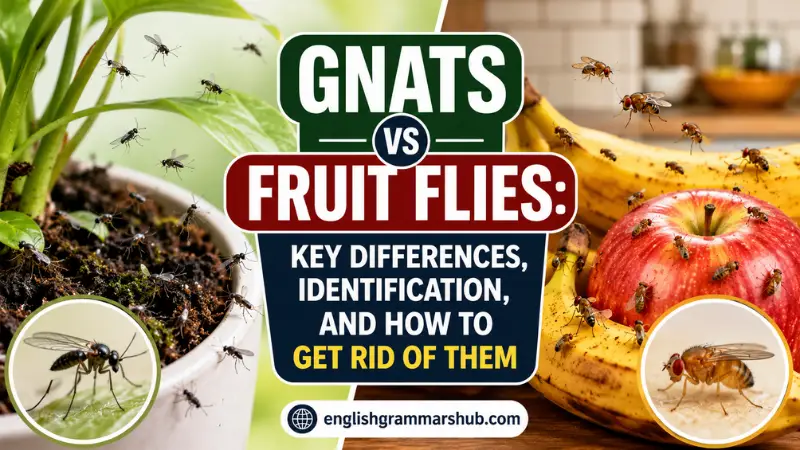
People often use the words gnats and fruit flies as if they mean the same tiny flying insects, but they are not the same. Although both pests are small, annoying, and commonly appear indoors, they belong to different insect groups and usually come from different sources. Gnats vs fruit flies comes down to differences in appearance, behavior, breeding habits, and the best way to control them.
Fruit flies usually gather around ripe or fermenting food, especially fruit, vegetables, and kitchen waste. Gnats are a broader group of small flies, and many types are attracted to moist soil, drains, plants, or decaying organic material. Knowing which pest you have helps you choose the right solution.
Quick Answer
Gnats and fruit flies are both tiny flying insects, but they are different pests. Fruit flies are usually found around overripe fruit, sugary liquids, and kitchen waste, while gnats often appear near moisture, houseplants, drains, or damp organic matter. Fruit flies have rounder bodies and are often tan or brown, while many gnats have slender bodies and longer legs.
Gnats vs Fruit Flies: Key Differences at a Glance
| Feature | Gnats | Fruit Flies |
|---|---|---|
| Main appearance | Small, slender insects with long legs and antennae | Tiny flies with rounded bodies and short antennae |
| Common color | Black, gray, or dark brown | Tan, brown, or yellowish |
| Typical location | Houseplants, drains, damp areas, outdoor soil | Fruit bowls, trash cans, kitchens |
| Attraction | Moisture and organic material | Fermenting fruits, sugars, and food waste |
| Flight pattern | Often weak, drifting, or hovering | Quick, darting movements |
| Main indoor problem | Fungus gnats around plants or moisture | Food contamination and kitchen infestations |
What Are Gnats?
The word gnat describes several types of very small flying insects. It is a common name rather than a single scientific category. Different gnats belong to different insect families, but many share similar traits: small size, delicate bodies, and an attraction to moisture.
Inside homes, the most common type is the fungus gnat, which often lives in the moist soil of houseplants. Adult fungus gnats fly around plants, windows, and lights, while their larvae feed on fungi and organic material in damp soil.
Other insects called gnats may appear outdoors near:
- Wet soil
- Ponds and standing water
- Compost piles
- Decaying leaves
- Drain areas
Because “gnat” covers many insects, the exact source matters when identifying and removing them.
What Are Fruit Flies?
Fruit flies are small flies from the family Drosophilidae. The most common household species is the common fruit fly, often called the vinegar fly because it is attracted to fermenting liquids.
Fruit flies usually appear when they find a food source such as:
- Overripe bananas
- Cut fruit
- Juice spills
- Wine or beer residue
- Garbage containing food scraps
- Compost containers
They reproduce quickly because they can lay eggs near fermenting organic material. A small kitchen problem can become a larger infestation within days if the breeding source remains.
Why People Confuse Gnats and Fruit Flies
People often confuse these insects because they share several characteristics:
- Both are very small.
- Both can appear suddenly indoors.
- Both fly around people and food.
- Both are difficult to catch by hand.
- Both reproduce quickly.
The confusion increases because many people use “gnat” as a general word for any tiny flying insect. However, their habits usually reveal the difference.
A small insect hovering around a houseplant is more likely a gnat. A tiny fly gathering around a bowl of fruit is more likely a fruit fly.
How to Identify Gnats
Look for these common signs:
Appearance
Gnats usually have:
- Thin, mosquito-like bodies
- Long legs
- Long antennae
- Narrow wings
Fungus gnats often look like tiny black flies floating around plants.
Behavior
Gnats often:
- Hover near soil
- Fly close to windows
- Gather around damp areas
- Move slowly compared with fruit flies
Common Places to Find Gnats
Check:
- Indoor plant soil
- Overwatered pots
- Bathroom drains
- Damp basements
- Outdoor gardens
How to Identify Fruit Flies
Fruit flies have different characteristics.
Appearance
Fruit flies usually have:
- Small rounded bodies
- Short antennae
- Red or dark eyes
- Tan, yellow-brown, or brown coloring
They are often smaller than common houseflies but have a noticeable fly-like shape.
Behavior
Fruit flies commonly:
- Hover around food
- Land on fruit surfaces
- Fly quickly in short bursts
- Gather in groups near kitchen areas
Common Places to Find Fruit Flies
Look near:
- Fruit bowls
- Trash bins
- Recycling containers
- Compost
- Sticky spills
- Empty bottles or cans
Do Gnats Bite Like Mosquitoes?
Some gnats can bite, but many common household gnats do not. Fungus gnats found around indoor plants are usually harmless to people and do not bite.
However, certain outdoor insects commonly called gnats, such as biting midges, can cause itchy bites.
If tiny flying insects are biting you, they may not be the same type of gnat found around houseplants.
Do Fruit Flies Bite Humans?
No, fruit flies do not bite humans. They are considered nuisance pests because they contaminate food and reproduce quickly, not because they attack people.
Fruit flies may carry microorganisms from dirty surfaces to food, which is why controlling an infestation is important in kitchens.
Where Do Gnats and Fruit Flies Lay Eggs?
The biggest difference between these pests is their breeding location.
Gnats
Many indoor gnats lay eggs in:
- Moist plant soil
- Decaying plant material
- Damp organic matter
Fungus gnat larvae need moisture, so overwatering plants often creates the perfect environment.
Fruit Flies
Fruit flies lay eggs near:
- Rotting fruit
- Fermenting liquids
- Food scraps
- Garbage residue
Removing the breeding area is usually more effective than only killing adult insects.
How to Get Rid of Gnats
The best treatment depends on the type of gnat.
For Plant Gnats
Try these methods:
- Allow the soil surface to dry between waterings.
- Remove dead leaves and organic debris.
- Use sticky traps to catch adults.
- Replace heavily infested soil if necessary.
For Drain or Moisture Gnats
Reduce moisture by:
- Cleaning drains
- Fixing leaks
- Removing standing water
- Keeping damp areas dry
How to Get Rid of Fruit Flies
Fruit flies require removing their food source.
Effective steps include:
- Throwing away overripe fruit.
- Cleaning food spills.
- Washing recycling containers.
- Covering fruit.
- Emptying trash regularly.
A simple vinegar trap can also help reduce adult fruit flies:
- Put apple cider vinegar in a small container.
- Add a drop of dish soap.
- Cover with plastic wrap and make small holes.
The smell attracts fruit flies, while the soap prevents them from escaping.
Which Is Worse: Gnats or Fruit Flies?
Neither pest is always worse because the problem depends on the situation.
Fruit flies are usually more frustrating in kitchens because they multiply quickly and appear around food.
Gnats can be more difficult when they come from houseplants because the larvae live in soil and require treating the breeding environment.
The better approach is to identify the source first instead of treating every tiny flying insect the same way.
Common Mistakes When Identifying These Insects
Mistake 1: Calling Every Small Fly a Fruit Fly
Not every tiny flying insect near your kitchen is a fruit fly. Check whether it is actually coming from food or from another moisture source.
Mistake 2: Killing Adults Without Removing Eggs
Sprays may kill visible insects, but new adults can appear if eggs and larvae remain.
Mistake 3: Ignoring Moisture Problems
Gnats often continue returning because damp soil, drains, or organic material still provide a breeding location.
Memory Trick: How to Remember the Difference
Use this simple rule:
Fruit flies follow food. Gnats follow moisture.
If they appear near bananas, juice, or garbage, think fruit flies.
If they appear near plants, wet soil, or drains, think gnats.
FAQs
Are gnats and fruit flies the same thing?
No. Gnats and fruit flies are different insects. They may look similar because both are tiny flying pests, but they have different body shapes, breeding areas, and food preferences.
Why do I suddenly have tiny flies in my kitchen?
Tiny flies in kitchens are often fruit flies attracted to ripe produce, food waste, or sticky spills. However, they could also be gnats if moisture or plants are nearby.
Can fruit flies come from houseplants?
Fruit flies usually do not come from houseplants. Small flies around plant soil are more commonly fungus gnats, which develop in moist soil.
How long do fruit flies live?
Fruit flies have a short life cycle and can reproduce quickly. Under favorable conditions, they can develop from eggs to adults in about a week.
Are gnats harmful to plants?
Fungus gnats are usually a minor problem, but heavy infestations can damage young plants because larvae feed on roots and organic material in soil.
What is the fastest way to tell gnats and fruit flies apart?
Look at where they gather. Fruit flies usually stay near food, while gnats usually appear near moisture, soil, or plants.
Conclusion
The difference between gnats vs fruit flies becomes clear when you look at where they live and what attracts them. Fruit flies are mainly food-related pests that gather around fermenting fruits, spills, and kitchen waste. Gnats are a broader group of tiny flies that often prefer moisture, plants, and damp organic material. For more information about identifying and managing common household pests, you can also refer to the guidance provided by the Environmental Protection Agency (EPA).
Identifying the insect correctly is the first step toward removing it. Remember the simple rule: fruit flies follow food, while gnats follow moisture. Once you find the source, controlling either pest becomes much easier.


